Growing food while regenerating the landscape
Sustainable Food & Agriculture
Sustainable food and agriculture should nourish people and regenerate the ecosystems that produce food.
At EcoPlanetFarm, we focus on healthy soil, responsible water use, biodiversity, climate resilience and nutritious food with a lighter footprint.
From Soil to Food
Our Approach to Sustainable Agriculture
From Soil to Food: Our Approach to Sustainable Agriculture
A Living Landscape for Food, Ecology and Learning
At EcoPlanetFarm, we see agriculture as part of a living ecological system. Soil, water, plants, microorganisms, insects, birds, climate and people continuously interact to determine how food is produced and how resilient the landscape becomes.
Our approach is based on more than a decade of field observation within a regenerative farm in the Western Ghats landscape of Maharashtra.
Rather than asking only “How much can we produce?”, we ask:
How can we produce nutritious food while improving the ecological system that produces it?
Healthy Soil Comes First
Food begins with soil.
Our approach emphasises biological activity, organic matter, recycling of farm biomass, mulching and minimum dependence on external inputs. Crop residues and biological materials are viewed as resources that can be returned to the soil wherever appropriate.
Healthy soil is not simply a growing medium. It supports water retention, nutrient cycling, microorganisms, plant resilience and ultimately the quality of food produced.
Water as an Ecological Resource
Water management is inseparable from agriculture.
Rainfall, soil moisture, vegetation, groundwater and farm water requirements are interconnected. Our objective is to retain water within the landscape, improve soil's capacity to hold moisture and use available water responsibly.
As climate variability increases, understanding these relationships becomes increasingly important for resilient agriculture.
Biodiversity Within Agriculture
A farm need not be a biological monoculture.
Fruit trees, native vegetation, aromatic plants, seasonal flowers, soil organisms, insects, birds and other life forms contribute to the ecological functioning of the landscape.
At EcoPlanetFarm, biodiversity is therefore not treated merely as something surrounding agriculture. It is part of agriculture.
Climate Resilience Through Observation
Changing temperatures, rainfall patterns, flowering behaviour, pest pressure, water availability and crop performance can provide early evidence of environmental change.
Long-term observation of the same landscape allows us to recognise relationships that may be difficult to see from short-term measurements alone.
Our approach is simple:
Observe → Question → Measure → Validate → Improve
Food Quality Begins Before Harvest
Food quality is usually evaluated after harvesting. We believe important information exists much earlier.
Soil conditions, plant health, water stress, temperature, maturity and biodiversity can influence the sensory and physiological characteristics of crops.
This leads to another area of our research interest: plant volatile organic compounds (VOCs), olfaction science and Aroma Intelligence System (AIS).
Plants continuously release complex chemical signals. We are exploring whether these invisible signals can eventually provide an additional layer of information about plant stress, maturity, ecological conditions and food quality.
From Farm to Local Food Systems
Sustainable agriculture should also consider what happens after food leaves the farm.
Harvesting, storage, processing, packaging, transportation, consumption and waste all contribute to the environmental footprint of food.
Where technically and economically feasible, we believe food processing and value addition should move closer to where crops are grown. Regional crops such as Konkan mango and jackfruit provide useful opportunities to investigate decentralised processing models that could reduce losses while retaining more value within farming communities.
Closing the Biological Cycle
Not everything harvested becomes food.
Peels, seeds, leaves, crop residues, rejected produce and kitchen waste may have further value as food ingredients, animal feed, compost, soil amendments or other biological resources, depending upon safety and suitability.
A more sustainable food system should therefore progressively move from:
Produce → Consume → Discard
towards:
Soil → Plant → Food → People → Biological Resources → Soil
EcoPlanetFarm as an Ecological Observatory
We do not claim to have all the answers.
EcoPlanetFarm is a place to observe, question, experiment and learn from a living landscape.
Our objective is to connect regenerative agriculture with food science, biodiversity, climate observation, olfaction science and emerging sensing technologies.
We welcome collaboration with researchers, academic institutions, students, farmers, food technologists and innovators interested in developing and validating practical approaches to more resilient food and agricultural systems.
Closing statement
The future of food is not simply about producing more. It is about understanding the living system from which our food comes.
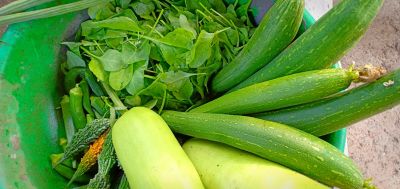
For the small vegetable image on the right, I would preferably replace it with a real EcoPlanetFarm image—your mango/jackfruit/banana harvest, soil/mulching work, mixed orchard, farm produce being shared locally, or you observing a crop. That will make this page evidence of a living observatory rather than a generic sustainability page.
From EcoPlanetFarm
Explore our field observations, regenerative agriculture practices, food systems thinking and ecological research.
Explore EcoPlanetFarm Blog
EcoPlanetFarm Blog
Global Reference
Learn more about the principles and global perspective on sustainable food and agriculture from the Food and Agriculture Organization of the United Nations (FAO).
Explore FAO Sustainability